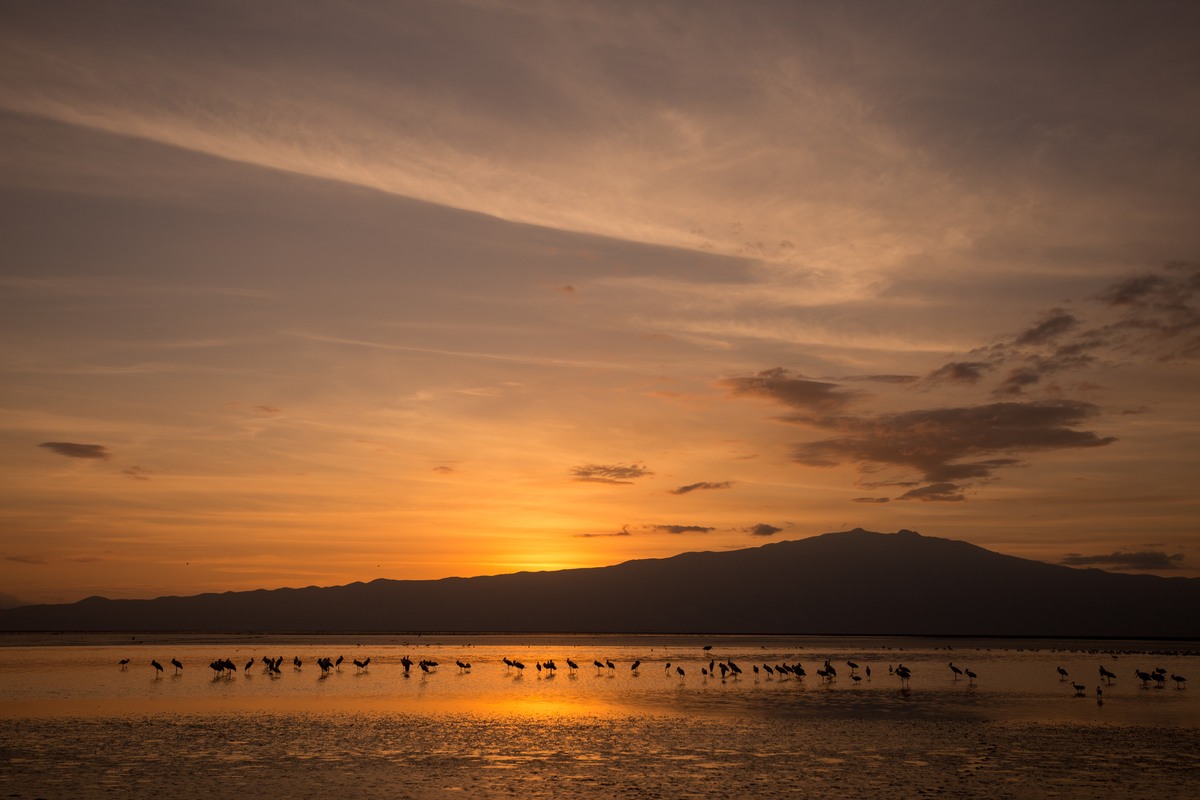
Lake Natron is a unique, highly saline lake located in northern Tanzania, close to the border with Kenya. It’s situated within the East African Rift Valley, an area of volcanic activity and geological wonder, which shapes the lake’s remarkable chemical composition. Known for its striking red and orange hues, which come from salt-loving microorganisms, Lake Natron stands out in the region as one of the most extreme environments on Earth. Its water can reach temperatures as high as 60°C (140°F) and has a pH level between 9 and 10.5, creating an inhospitable habitat for most forms of life. However, its harsh conditions support a unique ecosystem that has evolved to thrive in the lake’s waters.
The lake’s high alkalinity comes from the mineral-rich volcanic ash that is washed into the lake from nearby volcanoes, most notably Ol Doinyo Lengai, a sacred mountain for the Maasai people and the only active carbonatite volcano in the world. This alkaline environment is particularly suited to the growth of cyanobacteria, a type of salt-loving microorganism that produces red pigments when exposed to intense sunlight. These microorganisms, in turn, tint the water in vivid shades of red and orange. The coloration is most pronounced during the dry season when water levels are low, creating an otherworldly landscape.
Despite its inhospitable conditions, Lake Natron is a vital sanctuary for the lesser flamingo (Phoeniconaias minor). This flamingo species, listed as “near threatened,” relies heavily on Lake Natron as a breeding ground. The flamingos nest on the lake’s salt-crusted islands, where they are largely safe from predators due to the lake’s caustic waters. During the breeding season, Lake Natron supports over 2 million flamingos, which feed on the lake’s cyanobacteria. Their bright pink coloration is partly due to the beta-carotene in their diet, derived from these microorganisms. This breeding behavior makes Lake Natron a crucial habitat for the survival of the species.
The lake’s extreme environment has also led to some interesting myths and misconceptions. Due to its caustic waters, which can quickly calcify and preserve any animal remains, Lake Natron has gained a reputation as a “petrifying lake.” Birds and other small animals that die near the lake are often found preserved, leading to images of “stone” animals and stories of a lake that turns animals to stone. While these narratives have captured public imagination, the reality is less mystical: the lake’s high mineral content and alkalinity contribute to rapid mummification rather than petrification.
Lake Natron is more than a unique ecosystem; it’s also a place of cultural and environmental importance. The Maasai people have long regarded Ol Doinyo Lengai as sacred, and the surrounding region supports their traditional way of life. Efforts to protect Lake Natron are crucial not only for the wildlife it supports but also for the people who rely on the region’s natural resources. Conservation initiatives aim to balance ecological preservation with sustainable development, as the lake faces threats from proposed industrial projects, climate change, and other environmental pressures. Protecting Lake Natron is essential for maintaining its fragile ecosystem and preserving its breathtaking and otherworldly beauty.
Whether it’s your first safari or one of many, let us turn your travel dreams into reality. With Parks Frontiers and Safaris, your journey promises to be more than a trip—it’s a lifelong memory waiting to unfold.
CONTACTS
WE ACCEPT:


TOURS AND SAFARIS
TREKKING TOURS
COMPANY
Copyright © 2025. Parks Frontiers
Privacy Policy | Terms and Conditions